The scale and breadth of DARA’s field research and evaluation work gives the organisation an unparalleled overview of what works well and what does not in aid – based on direct experience and evidence from the field:
Retrospective evaluation of the GFDRR Program in a sample of disaster-prone countries EVAL
Despite overall awareness of the need to invest efforts in increasing Disaster Risk Management (DRM) among vulnerable country governments and the international aid community, there is a gap between high level commitments and actual achievements on the ground [...] Read more...
IASC Evaluation of humanitarian interventions in South and Central Somalia from 2005-2010 EVAL
This ex-post evaluation has been managed by the UN’s Office for the Coordination of Humanitarian Affairs (OCHA) supported by Danish Refugee Council on behalf of the IASC and funded by Danida, DFID, SDC, and SIDA. The Inter Agency Standing Committee (IASC) [...] Read more...
Evaluation of capacity development and its impact on institutionalization of emergency preparedness and response (EPR) and Conflict/Disaster Risk Reduction (C/DRR) in the education sector in the West and Central Africa region (WCAR). EVAL
UNICEF West and Central Africa Regional Office (WCARO) contracted 2 DARA consultants to conduct a multi-country evaluation study of its emergency preparedness and response (EPR) and conflict/disaster risk reduction (C/DRR) capacity development and institutionalization [...] Read more...
WFP Operation Evaluation in Somalia EVAL
For over two decades Somalia has suffered from prolonged conflict, protracted crisis and insecurity causing massive damage to human livelihoods and the provision of social services such as health, education, water, sanitation, food and nutrition. In addition [...] Read more...
Evaluation of DIPECHO (Disaster Preparedness ECHO) Action Plans in Central America EVAL
The purpose of this evaluation was to assess the progress made towards enhancing resilience and reducing vulnerability to natural disaster of the most at-risk populations and the institutions of Central America. The focus was on reviewing DIPECHO and measuring [...] Read more...
Thematic study on the Paris Declaration, Aid Effectiveness and Development Effectiveness EVAL
Prepare Evaluative Framework (Conceptual and Theoretical) for Second Phase of the Evaluation of Paris Declaration. The assignment focused on four central stages: Analysis of key concepts and causal relationships in the PD, including analysis of the evolution [...] Read more...
IA-RTE Philippines of the Humanitarian Response to Typhoons Ketsana and Parma EVAL
The IA-RTE provided a snap shot of the current situation including real-time feedback and learning to the UNCT and to the IASC locally. The main objectives will be to learn from the initial phase of the response and to identify lessons that need to be taken forward [...] Read more...
Evaluation of DG ECHO’s action in the Democratic Republic of the Congo (DRC) EVAL
DARA has been commissioned by ECHO (the European Commission Humanitarian Aid Office) to carry out the “evaluation of DG ECHO’s action in the Democratic Republic of the Congo (DRC)”. The evaluation purpose is twofold. On the one hand it will look at the relevance [...] Read more...
Impact Evaluation of World Food Programme’s School Feeding Programme in Cambodia 2000-2010 EVAL
The impact evaluation of the national school feeding programme in Cambodia is commissioned by the World Food Programme. The programme is designed to benefit more than half a million of children in Cambodia’s most vulnerable areas. Through the school feeding [...] Read more...
Inter-Agency Real Time Evaluation of the Humanitarian response to Pakistan’s Displacement Crisis in 2009 EVAL
This evaluation was listed by UNICEF as one of the best evaluations in recent years. The Inter-Agency Standing Committee (IASC) commissioned an inter-agency real-time evaluation to obtain real-time analysis and feedback to better focus and adjust on-going [...] Read more...
Inter-agency Real Time Evaluation (IA RTE) of the Humanitarian Response to the Floods in Pakistan EVAL
This evaluation was listed by UNICEF as one of the best evaluations in recent years. The evaluation was commissioned by the Inter‐Agency Standing Committee (IASC), funded by OCHA and undertaken by a team of four evaluators between January and March 2011. [...] Read more...
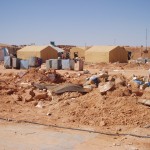
Evaluations of DG ECHO’s Actions in the Saharawi Refugee Camps
In 2009, DARA was selected by the European Commission’s Humanitarian Aid department to evaluate its humanitarian assistance to Saharawi refugees displaced by the conflict over Western Sahara. The three-month study, between April and June 2009, was the first [...] Read more...


Share this